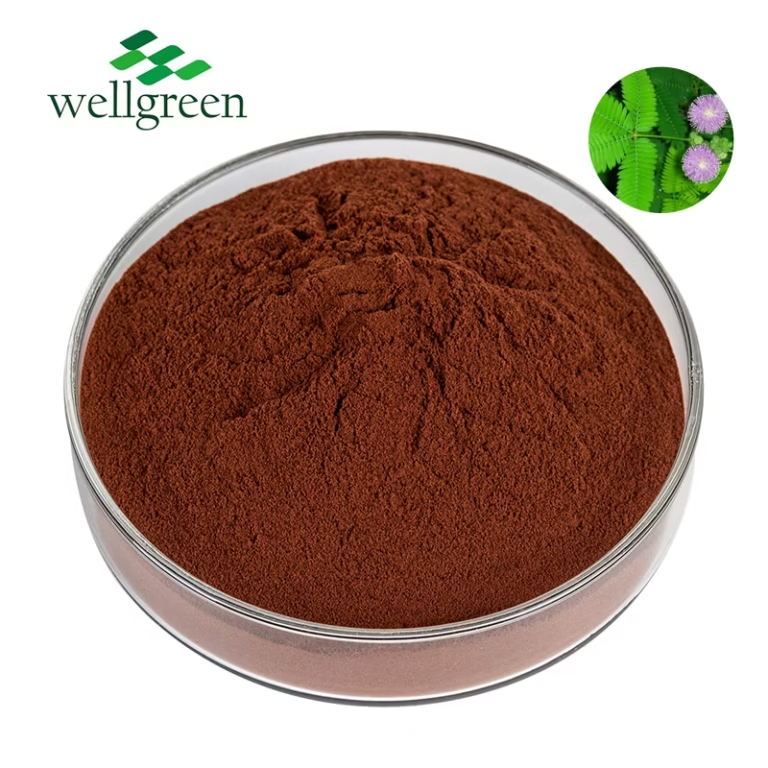
The root of Mimosa tenuiflora, commonly known as quebracho blanco, have been used for time immemorial in indigenous medicine across various regions.
Ethnobotanical studies reveal the efficacy of M. tenuiflora extracts in treating a wide range of ailments, including infections.
Traditional healers utilize the plant material in diverse forms such as tinctures to alleviate conditions.
Some key applications of M. tenuiflora contain antimicrobial activity, and it is also thought to possess analgesic properties.
An Examination of Mimosa tenuiflora Root Bark Extracts
This study focuses on investigating the phytochemical composition of Mimosa tenuiflora root bark extracts. The procurement methods employed involved multiple solvents, including ethanol. The resultant extracts were then subjected to a battery of analytical tools such as thin-layer chromatography (TLC) to characterize the predominant phytochemical click here molecules. Preliminary results reveal the presence of a array of secondary metabolites, including flavonoids, which are known for their pharmacological properties. This comprehensive phytochemical analysis aims to provide valuable insights into the potential of Mimosa tenuiflora root bark as a source of natural remedies.
Historic Uses and Potential Medicinal Benefits of M. tenuiflora Root Bark
M. tenuiflora, a species renowned for its unique root bark, has been used in traditional medicinal practices for centuries. Indigenous communities have long acknowledged the medicinal properties of this powerful ingredient. The root bark is traditionally extracted and consumed to treat a spectrum of ailments, including inflammatory conditions.
Contemporary research is beginning to explore the potential of M. tenuiflora root bark in providing medicinal benefits. Studies have suggested that certain elements present in the bark may possess antibacterial properties, affecting its potential to neutralize a broad array of diseases. Moreover, preliminary research suggests that M. tenuiflora root bark may also possess brain-boosting effects, though more extensive studies are essential to substantiate these findings.
Pharmacological Activity of Mimosa tenuiflora: A Review of Root Bark Studies
Mimosa tenuiflora, commonly referred to as the jurema plant, has a profound history of cultural medicinal practice in South America. The root bark of this species is particularly regarded for its diverse bioactive properties. Numerous investigations have examined the potential actions of M. tenuiflora root bark, revealing a range of compounds with significant biological potency.
- One domain of particular attention is the immunomodulatory capability of M. tenuiflora root bark extracts.
- Initial evidence suggests that these preparations may regulate the immune response, potentially providing comfort from diverse inflammatory disorders.
- Additionally, studies have demonstrated that M. tenuiflora root bark may possess antioxidant characteristics, which could offer benefits to human health by counteracting oxidative stress.
The complex nature of M. tenuiflora root bark composition and its possibilities for therapeutic applications warrant further exploration. As research advances, a more comprehensive understanding of the pharmacological activity of M. tenuiflora root bark may emerge, potentially leading to the development of novel and effective healthcare interventions.
Extraction and Analysis of Medicinally Potent Molecules from *M. tenuiflora* Root Bark
This research focuses on the extraction of medicinal substances from the root bark of *M. tenuiflora*. Multiple extraction methods, such as organic liquids, will be utilized to isolate a variety of extracts. The identification of these extracts will involve assays like mass spectrometry and chemical analysis. The biological properties of the isolated substances will also be evaluated using in vitro systems.
The objective of this research is to identify and characterize potent compounds from *M. tenuiflora* root bark with potential benefits in healthcare.
Exploring the Anti-inflammatory and Antioxidant Properties of Mimosa tenuiflora Root Bark
Mimosa tenuiflora, commonly known as the Horse tree, is a plant native to arid regions. Recent research has focused on its {potentialuses for human health, particularly concerning its immunomodulatory and antioxidant properties. The root bark of Mimosa tenuiflora is a rich wellspring of bioactive compounds such as alkaloids, which have been shown to exert potent influences against cellular damage.
- Studies have demonstrated that extracts from Mimosa tenuiflora root bark can effectively reduce the production of inflammatory mediators in both *in vitro* and *in vivo* models.
- Furthermore, these extracts have exhibited notable scavenging effects by trapping harmful free radicals, protecting cells from damage.
These findings suggest that Mimosa tenuiflora root bark holds promise as a {naturaltreatment for various inflammatory and oxidative stress-related conditions. However, further research is needed to fully elucidate its mechanisms of action and optimize its therapeutic use.